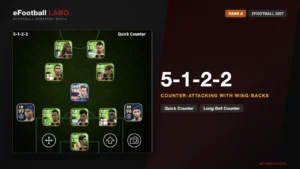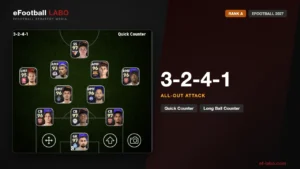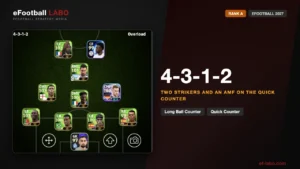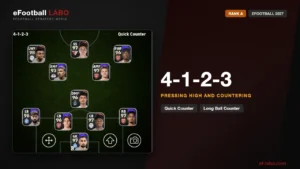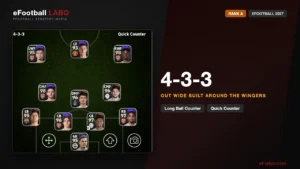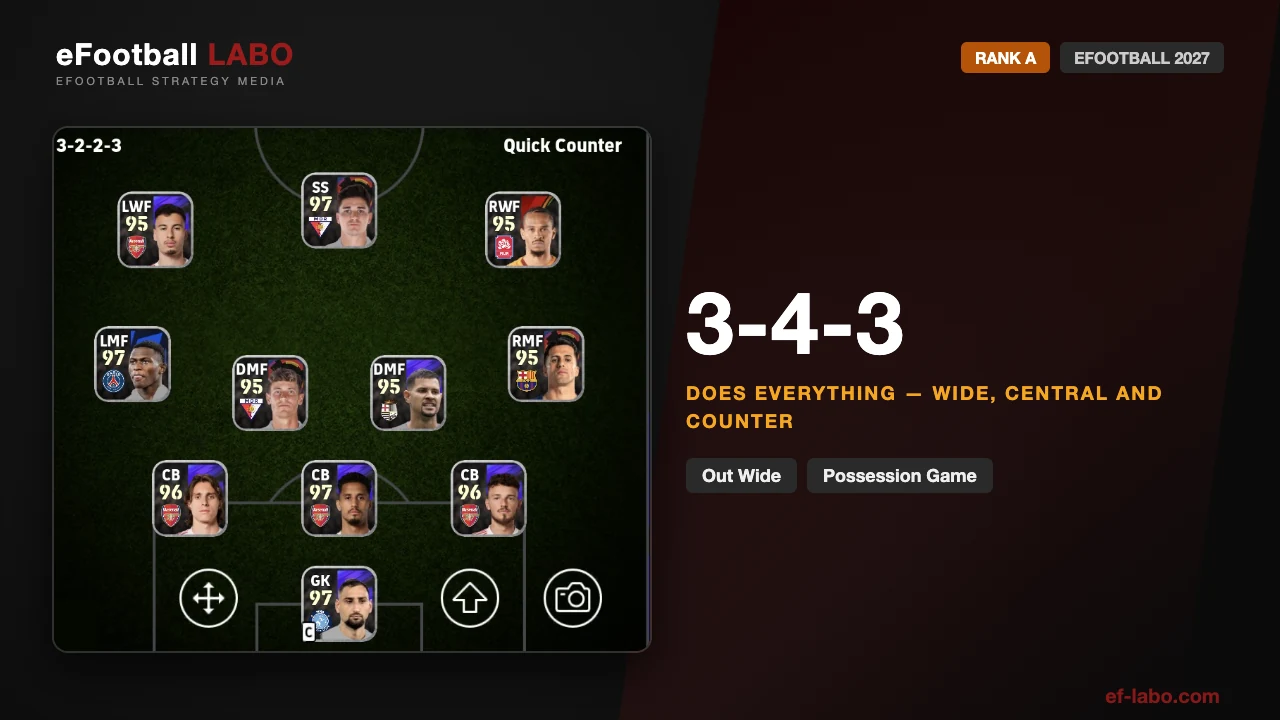
- Rank A. Tested so far in Division 2.
- Four players on the flanks. Wide attacks are the spine, but possession and counters both work.
- Three at the back means counters hurt. One CMF holding in front of them is what keeps it together.
The 3-4-3 gives you more ways to attack than any other shape we have tested. Two wingers and two wide midfielders give you four players on the flanks, a back three lets you commit numbers forward, and you can play possession, wide attacks or counters equally well. You pay for it at the back: three defenders against a good counter is thin, and the space between them and midfield is where you get hurt.
3-4-3: overview
| Rank | ATested in Division 2 |
|---|---|
| In one line | Four Team Playstyles all work with it, built around two strong wingers |
| Biggest weapon | Wide attacks from the winger and wide midfielder on the same side |
| Biggest weakness | Three at the back, and the space in front of them |
| Suits you if | You have wingers worth building a side around |
| Not for you if | You want to counter through the middle |
| Team Playstyle | Out Wide / Possession Game (counters work too) |
Rank A. Ranks come from how a formation holds up as we take it up the divisions — this one holds up in Division 2. We have not logged a full run of games with it yet, so treat the rank as provisional.
What it does well, and where it hurts
- A winger and a wide midfielder on each side gives you four players attacking the flanks.
- Only three defend, which frees enough players forward that possession, wide attacks and both kinds of counter are all on — you pick by what the game needs.
- A back three is a spare defender against two forwards, so building up is comfortable and you can take your time.
- The space between the back three and midfield opens up, and that is where shots come from.
- Against a front three, building up is hard — three against three at the back is not an advantage.
- Three defenders means a counter with numbers gets at you.
The shape
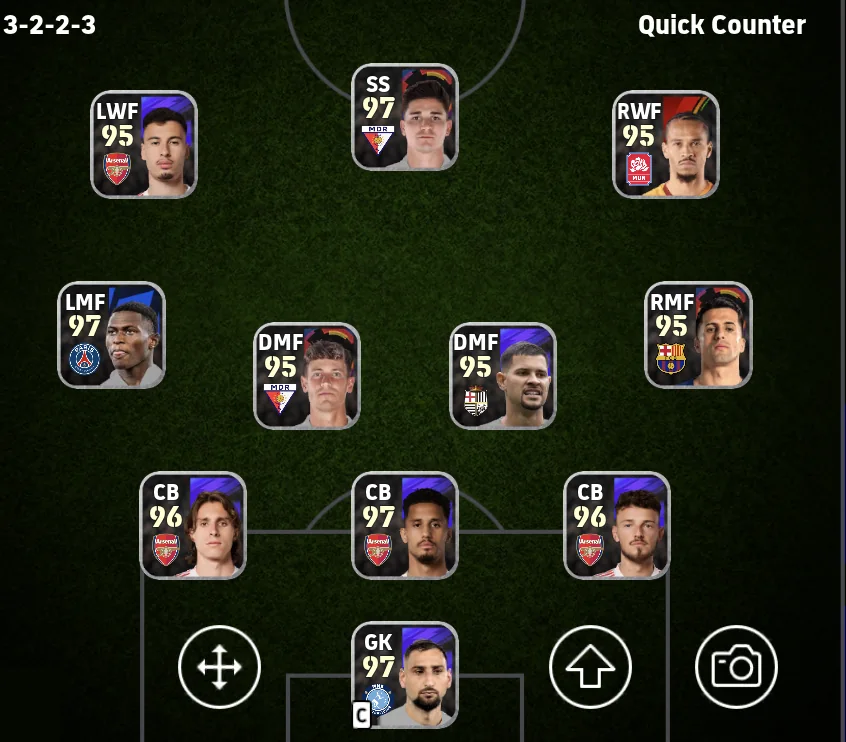
3-4-3: three CBs, two wide midfielders with two CMFs, and a front three.
Three CBs, then two CMFs with a wide midfielder either side, and a front three of two wingers and a CF. There are no full-backs — the width comes from the wingers and the wide midfielders, and the CF drops in to join the build-up.
How to attack
Four players attack the flanks — two wingers and two wide midfielders. That is the spine of it, but the shape is not limited to crossing: the same players can keep the ball, break at speed, or play the diagonal in behind. Pick by what the game gives you.
Possession Game: the diagonal in behind
The patient one. Move them around through the middle first, then go wide — the pass that hurts is the diagonal, not the cross.
- A CMF works it through the middle and out to the LWF
- The LWF plays a diagonal through ball
- The CF, who had dropped in, spins and runs in behind
- The CF finishes
Long Ball Counter: win the header, then in behind
The direct one. The CF wins the first ball and the winger attacks the space beside their back line.
- A CB goes long and the CF wins the header
- The CF heads it down to a CMF
- That CMF slides a through ball into the space beside their back line
- The LWF gets away and finishes
Out Wide: the wide midfielder coming inside
The signature move. This is the underlap — the run inside the winger rather than round the outside. It drags a defender with them and opens the flank.
- A CMF gives it to the RWF
- The RMF underlaps on the inside
- The RMF gets in behind their wide defender and slides it across
- The CF meets it and finishes
Quick Counter: the one-two, then the cut-back
Win it high and go straight at them. Two passes and you are through.
- The RWF intercepts in their half and plays it into the CF
- The CF returns it first time and the RWF runs past
- The RWF squares it back to the CF arriving in the middle
- The CF finishes
Building up
How hard this is depends entirely on how many forwards they play. The spare man you have against two disappears against three, and their press has you covered. The fix is to drop a CMF in beside the CBs so the numbers work again.
Through the middle, then out
Use the two CMFs to pull them in first. Going straight out wide lets them shuffle across with you; making them come inside first is what opens the flank.
- A CB finds a CMF in the middle
- The two CMFs exchange passes to pull them in
- A CMF plays a vertical pass into the CF
- It goes out wide from there
Round the side when the middle is shut
The other way round. Go out first, come back inside to drag them narrow, then use the width you have just opened.
- The right-sided CB gives it to the RMF
- The RMF plays it inside to a CMF
- That CMF switches it out to the RWF
Mistakes people make, and the fix
A front three counters you and it is three against three
| Why it happens | What to do |
|---|---|
| Three at the back looks solid until they break with three. A winger drags a CB out, the diagonal goes in behind, and it comes down to a foot race your CB has to win. | Keep one CMF in front of the back three and do not let that player push on. That is the difference between three against three and four against three. |
A CB carries it forward, loses it, and you have two defenders left
| Why it happens | What to do |
|---|---|
| Against two forwards nobody presses your CBs, so carrying it looks free. It is not — lose it there and only two defenders are home. | Do not carry it that far. Find the free CMF or the wide midfielder and let them take it forward instead. |
How to defend with it
Three at the back is the thing you are managing all game. The two places it goes wrong are the space in front of the back three, and a counter that arrives with more players than you have back.
| Area | What to do |
|---|---|
| The CMFs | The middle is where this shape leaks. One CMF holds in front of the back three and stays there, even when the ball goes wide. The other is free to press and join in. |
| Wide | The CB on that side goes out to their winger, with the wide midfielder tracking back to help. That pulls the back three across, which is why the middle needs a CMF sitting in it. |
| Back line | Pace is not optional with three at the back. A ball over the top with one CB dragged wide is the goal you concede most, and speed is what covers it. |
| When ahead | Go to a back four. 4-2-1-3 keeps your front three and gives you two holding midfielders, which takes the three-against-three problem away. |
Players and playing styles that fit
The playing style matters more than the overall rating here. These are the ones the shape actually asks for.
| Position | Playing Style | Why |
|---|---|---|
| CF | Deep-Lying Forward | Drops in to take the vertical pass and set the wingers away. Also the one who wins the first ball on a long counter. |
| Wingers (both) | Prolific Winger | The reason to play this shape. How good these two are decides how good the attack is. |
| Wide midfielders (both) | Box To Box | Come inside to thicken midfield, then get forward on the inside run. They defend the flank as well. |
| CMF (the holder) | Destroyer, or any CMF set to Defensive | What matters is the Defensive setting in Individual Instructions, not the playing style — that is what keeps this player in front of the back three. Destroyer fits the job best of the styles a CMF can use. |
| CMF (the other) | Orchestrator | Takes the ball off the CBs and moves the side up the pitch. Passing quality is what you want. |
| CBs (all three) | Build Up, and quick | Pace first — with three at the back you cannot cover a ball over the top any other way. Good on the ball, because they start everything. |
Best managers for this formation
3-4-3 runs on Out Wide and Possession Game, so what you want is a manager with high proficiency in those. Every manager below is rank SS on eFootball LABO — high proficiency, a booster and a link-up — picked for their proficiency in these playstyles.
Best managers for Out Wide





Best managers for Possession Game




Get it to the wingers and let the wide midfielders run inside off them. One CMF stays in front of the back three all game. Go to a back four when you are ahead.
Matchups
| Opponent | Matchup | Why, and what to do |
|---|---|---|
| Sides with two forwards | Good | Three at the back against two forwards is a spare man. You can build up in comfort and take your time. |
| Sides with a front three | Poor | Three against three at the back, both when they press and when they counter. Drop a CMF in to make the numbers work. |
| Sides that counter with numbers | Even | Only three are home. The CMF who stays in front of the back three is what turns this from a problem into a manageable one. |
Matchups are provisional and come from played matches. We update them as we play more.
FAQ
Is 3-4-3 good in eFootball?
What Team Playstyle should I use with 3-4-3?
What is the weakness of 3-4-3?
Why is build-up hard against a front three?
What should I do when I am ahead?
Summary
- The spine of it is four players on the flanks and a back three. Wide attacks first, but possession and counters are both available.
- The price is three at the back. A counter with numbers, and the space in front of them, are where the goals against come from.
- One CMF holds in front of the back three all game, and the CBs have to be quick. Go to a back four when you are protecting a lead.