- What it is: defend deep, play long to the forwards and win the second ball
- Strength: a very solid low block that is hard to beat in behind
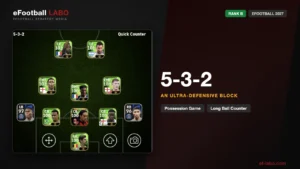
- Best formations: shapes with numbers at the back and a target up front, such as 5-2-2-1
- Weak spot: a one-dimensional attack that fails when the long ball does not stick
What is Long Ball?
Long Ball is a Team Playstyle that defends solidly in its own half, plays long to the forwards when it wins the ball, and attacks by winning the second ball. A single long pass is the attack, so it does not need many players up front, and the defence is very solid.
It is simple and hard to break down, but the attack can get one-dimensional, and it does not work if the long ball does not stick. The managers and players that suit it are limited too, so it is not one we recommend first: it is an option for experienced players who want to use a target forward.
How the players move
The two keys are defending solidly in your own half, and the long ball with the second ball after it.
Red: your team · Grey: the opponents · White: the ball · Red arrows: how your players move
Out of possession, the back line sits low in a low block. In attack, the GK or CBs play long to the forwards, for example from a goal kick, and the forwards gathered in the middle pick up the second ball to carry on the attack.
Long Ball in each situation
| Situation | What the team does |
|---|---|
| Your goal kick | The GK kicks long towards the forwards (the CBs also push up) |
| CB on the ball | Midfielders stay away; the forwards position themselves in the middle for the second ball |
| Wingers and wide midfielders | Gather in the middle |
| Opponent’s goal kick | A low block. The CF and midfielders sit deeper and protect the back |
| Defensive line | Low. The back line drops |
| Losing the ball | A retreat. Players get back into their own half and set the defence |
| Winning the ball | A slow build-up. Long to the forwards, then build from the second ball |
Best formations for Long Ball
Long Ball works best with shapes that keep numbers at the back and still have forwards to aim at and to win the second ball. These are easy ones to use:
| Formation | Why |
|---|---|
| 5-2-2-1 | Five at the back is the most solid and the most stable shape for Long Ball. Win it early and play to the forward |
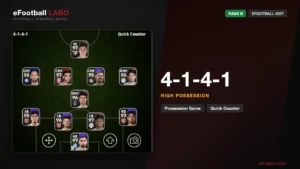
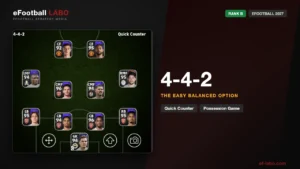
| 4-4-2 | The two forwards share the target and second-ball roles, and it is easy to form a defensive block |
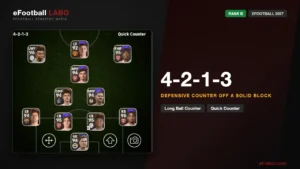
| 4-2-1-3 | Three forwards give a target and numbers for the second ball. Gather them in the middle to win more of them |
Build it around a tall, strong forward to aim at.
Best managers for Long Ball
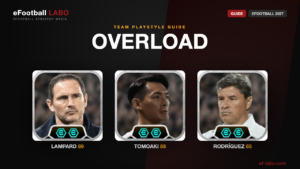
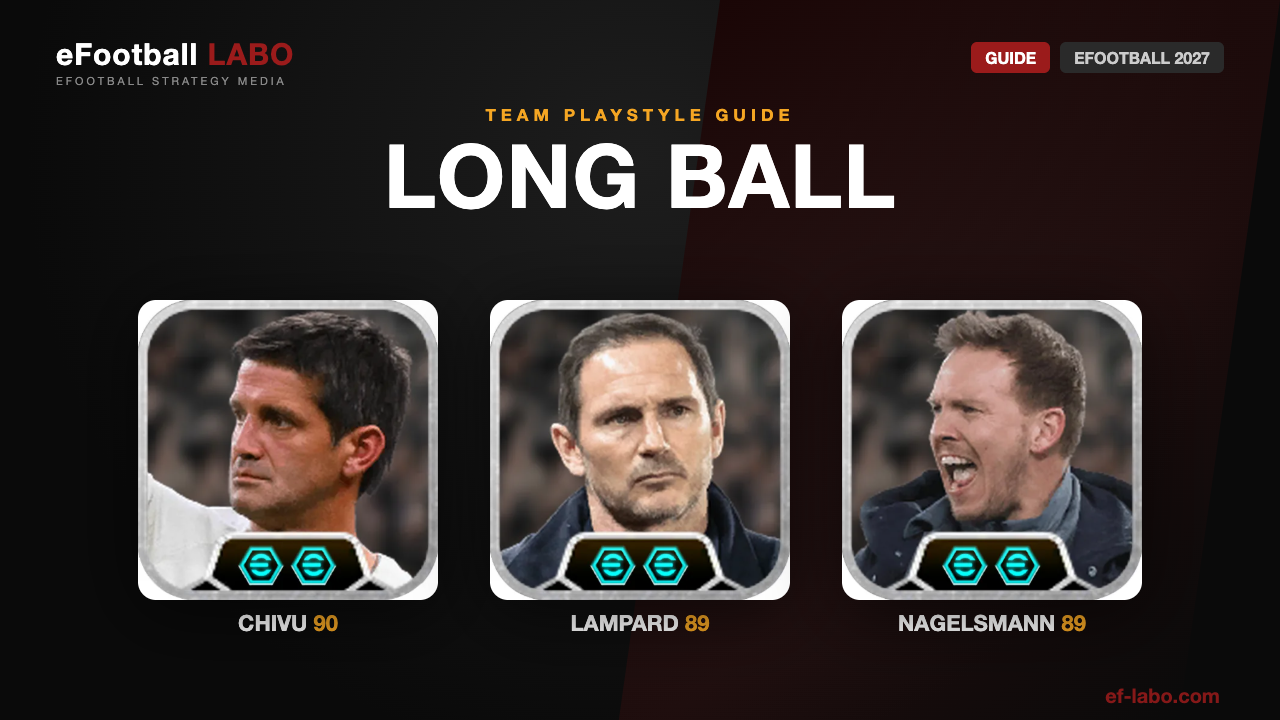
The higher a manager’s Team Playstyle Proficiency for Long Ball, the bigger the boost to the squad. The boost is at its maximum from 85. These five are among the managers with the highest Team Playstyle Proficiency for Long Ball:
| Manager | Proficiency | Boosters |
|---|---|---|
 Cristian Chivu (26-27) | 90 | Low Pass +1 / Lofted Pass +1 |
 Frank Lampard | 89 | Low Pass +1 / Defensive Engagement +1 |
 J. Nagelsmann | 89 | Dribbling +1 / Physical Contact +1 |
 M. Allegri | 89 | Attacking Awareness +1 / Ball Control +1 |
 R. Martínez | 89 | Finishing +1 / Attacking Awareness +1 |
How to attack with Long Ball
- Play to a target: put a forward with height, strength and hold-up play up front as the target for the long ball
- Win the second ball: gather players around the target, pick up the loose ball and start the next attack
- Go forward simply: after winning the ball, do not force short passes. Go long first
- Get to the loose ball: read where the header will drop, and react quickly with midfielders and forwards
Without a forward who holds the ball up or wins the header, this style’s attack hardly works.
Defending and the weak spot
Out of possession, a low back line and a block in your own half are very solid and hard to beat in behind. The defence stays stable even with few players in attack.
The weak spot is a one-dimensional attack. If the long ball does not stick or you lose the header, the attack does not work at all. The managers and players that suit it are limited too, so it is hard to build.
Sit deep and the opponent keeps the ball and wears you down. Get the ball forward after you win it to take a breather, and do not just defend.
How to beat Long Ball
Against Long Ball, the keys are the header and the second ball. Play a CB who wins headers and midfielders who can pick up the loose ball, and give their target no freedom.
They sit deep, so keeping the ball and pushing them back takes away their chances to attack. Mark the target and control the second ball, and a one-dimensional attack has nothing left.
Long Ball vs Long Ball Counter
Both defend deep, but they attack in different ways.
| Long Ball | Long Ball Counter |
|---|---|
| Plays long to the forwards and wins the second ball | Wins the ball and runs into the wide space behind |
| Uses a target forward | Uses a fast forward |
| Defends deep and goes forward simply | Defends deep and counters into space |
If you want to use a tall, strong target, choose Long Ball. If you want to get in behind with pace, choose Long Ball Counter.
FAQ
What is Long Ball in eFootball?
What is the best formation for Long Ball?
What is the weakness of Long Ball?
Summary
- Long Ball defends solidly, plays long and wins the second ball.
- A low block in defence; players gather in the middle for the loose ball.
- Play to a target and win the second ball. The target forward is the key.
- Its weak spot is a one-dimensional attack, and it is not one we recommend first.
- Pair it with a manager with high Team Playstyle Proficiency for Long Ball.